Air Source Heat Pumps: The Complete UK Guide (2026)
How they work, what they cost, and whether one is right for your home.

An air source heat pump (ASHP) extracts heat from the outdoor air and uses it to heat your home and hot water. For every 1 kWh of electricity it uses, it produces around 3–3.5 kWh of heat — making it roughly three times more efficient than a gas boiler. A typical ASHP costs £8,000–£15,000 installed, dropping to £500–£7,500 after the £7,500 BUS grant. Over 90% of UK heat pump installations are air source.
£500–£7,500
Net cost after BUS grant
Source: MCS / Ofgem 2026
3.0–3.5
Typical COP (efficiency)
Source: MCS data
20–25 yrs
Expected lifespan
Source: Energy Saving Trust
2–4 days
Typical installation time
Source: MCS installers
How Does an Air Source Heat Pump Work?
An air source heat pump works like a fridge in reverse. Even when it's cold outside — even below freezing — there's still heat energy in the air. The heat pump captures this energy, concentrates it, and uses it to heat your radiators, underfloor heating, and hot water.
The process works in four steps:
- Evaporation: A fan draws outdoor air over a heat exchanger containing a refrigerant. The refrigerant absorbs heat from the air and evaporates into a gas, even at temperatures as low as –20°C.
- Compression: An electrically-powered compressor squeezes the gas, dramatically increasing its temperature. This is where the “magic” happens — the compressor concentrates the harvested heat into a much higher temperature.
- Condensation: The hot gas passes through a second heat exchanger (the condenser), transferring its heat to the water in your heating system. The refrigerant cools and returns to a liquid state.
- Expansion: The liquid refrigerant passes through an expansion valve, reducing its pressure and temperature, and the cycle starts again.
This continuous cycle is driven by a small amount of electricity (powering the compressor and fan) but produces significantly more heat energy than the electrical energy consumed. That's why heat pumps have efficiency ratings of 300%+ — they don't create heat, they move it.
How a Heat Pump Works
Outdoor unit absorbs heat from air
Even at temperatures as low as -20°C
Compressor increases temperature
Electricity powers the compression cycle
Heat exchanger transfers warmth to water
Hot refrigerant heats your water supply
Warm water flows to radiators & hot water
Your home stays warm at 20°C+
For every 1 unit of electricity used, a heat pump produces approximately 3 units of heat.
Key Terms Explained
Air Source Heat Pump Costs
A typical air source heat pump installation costs £8,000–£15,000 in the UK. After the £7,500 BUS grant (available in England and Wales), you'll pay £500–£7,500 net. Scotland offers similar support through the Home Energy Scotland scheme.
The total price includes the outdoor unit, indoor components, a hot water cylinder, all pipework and electrical connections, commissioning, and the MCS certificate. For a full breakdown by property type, see our cost guide.
Running costs for a typical 3-bed semi are £500–£800 per year. That's lower than gas (£800–£1,100), oil (£1,200–£1,800), or LPG (£1,000–£1,600). Full details on our running costs page.
Maintenance is straightforward and affordable. An annual service costs £100–£200 — similar to a gas boiler service. With fewer moving parts and no combustion, ASHPs tend to be reliable. Filters should be checked regularly and the outdoor unit kept clear of leaves and debris.
Efficiency and Performance
Modern air source heat pumps achieve a COP of 3.0–3.5 under typical UK conditions. This means for every 1 kWh of electricity, you get 3.0–3.5 kWh of heat. By comparison, even the best gas boiler is only 90–94% efficient (0.9–0.94 kWh of heat per kWh of gas).
Efficiency varies with outdoor temperature. On a mild autumn day (10°C), COP might reach 4.0+. On a cold winter day (0°C), COP drops to around 2.5–3.0. On the very coldest nights (–5°C to –10°C), COP may fall to 2.0–2.5. But even at the lowest point, the heat pump is still producing 2–2.5 times more heat than the electricity it consumes — far more efficient than any boiler.
The key to maximising efficiency is keeping the flow temperature low. An ASHP running at 35°C flow temperature is significantly more efficient than one running at 55°C. This is why insulation and correctly-sized radiators matter — a well-insulated home can be heated effectively with low flow temperatures.
Winter performance: Modern ASHPs work efficiently down to –20°C. UK winters rarely see temperatures below –10°C. In Scandinavia, where winter temperatures regularly drop to –20°C, heat pumps are the most popular heating choice. Your ASHP will handle a British winter comfortably.
How we calculated this
COP figures are based on MCS installation monitoring data and manufacturer specifications under EN 14511 testing conditions. Real-world SCOP figures come from the Electrification of Heat Demonstration Project (BEIS) and Energy Systems Catapult field trials. We report typical ranges rather than best-case lab figures.
Ready to take the next step?
Get free, no-obligation quotes from MCS-certified heat pump installers in your area. Takes 2 minutes.
Get free quotes from MCS-certified installersNo obligation. We are not installers. Independent advice.
Pros and Cons of Air Source Heat Pumps
Advantages
- ✓£7,500 BUS grant dramatically reduces upfront cost
- ✓3x more efficient than a gas boiler — lower running costs
- ✓20–25 year lifespan (vs 12–15 for a gas boiler)
- ✓Low carbon emissions that decrease as the grid decarbonises
- ✓No gas supply needed — ideal for off-grid properties
- ✓Minimal groundwork required (unlike ground source)
- ✓Can provide cooling in summer (some models)
- ✓Low maintenance — no combustion means fewer things to go wrong
Disadvantages
- ✗Higher upfront cost than a gas boiler (before grant)
- ✗Outdoor unit produces some noise (40–50 dB at 1 metre)
- ✗Some homes may need radiator upgrades for optimal performance
- ✗Requires outdoor space for the unit (roughly 1m x 1m)
- ✗Slightly less efficient than ground source (especially in winter)
- ✗May need a hot water cylinder if you currently have a combi boiler
- ✗Best performance requires good insulation
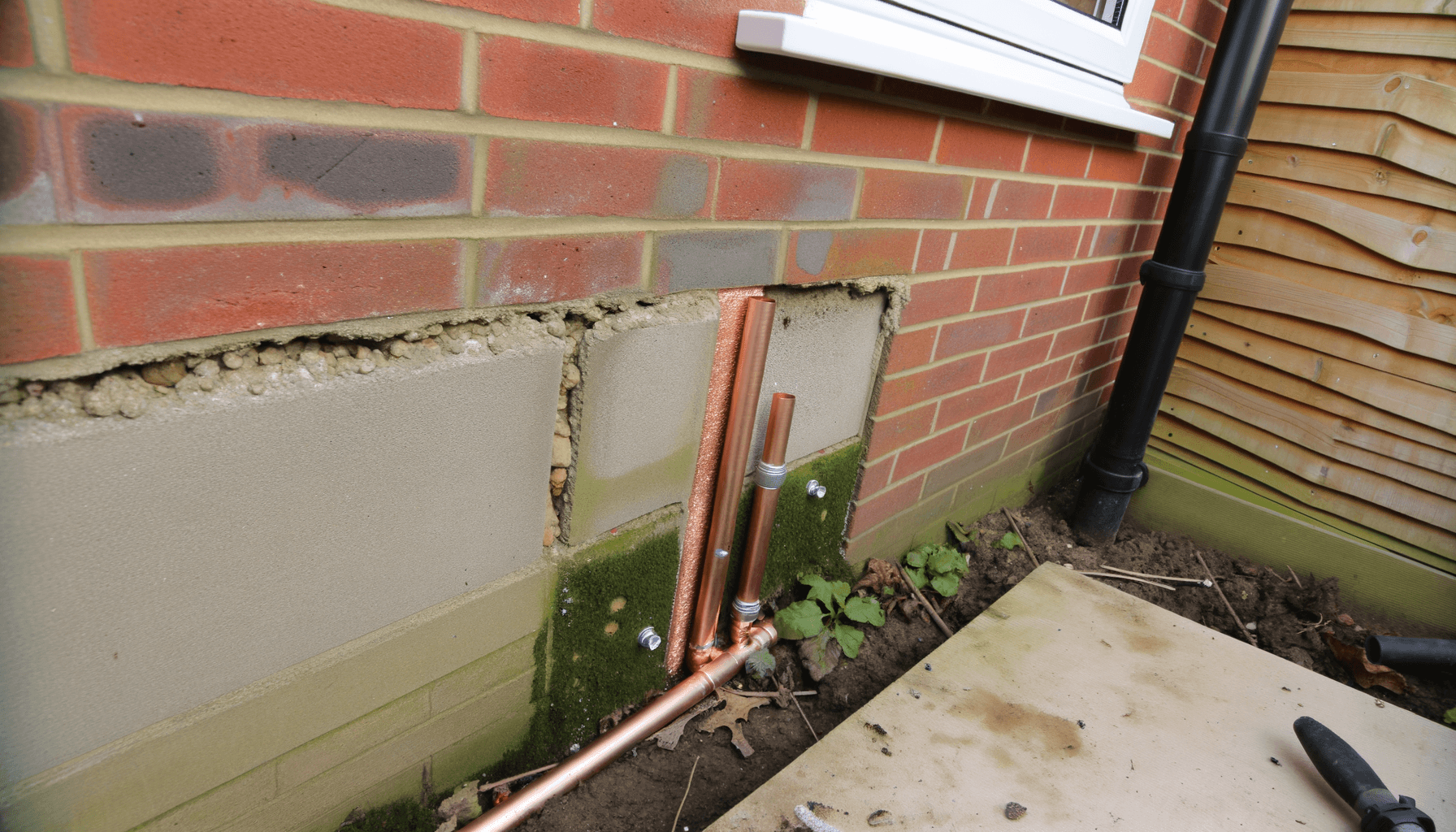
Installation: What to Expect
A typical air source heat pump installation takes 2–4 days. Here's what happens:
- Day 1: The outdoor unit is mounted on a concrete plinth or wall brackets in your garden. Refrigerant pipes are run from the outdoor unit into your home. The old boiler is disconnected (if being replaced).
- Day 2: Indoor components are installed — the heat pump's indoor module, controls, and hot water cylinder (if needed). Connections to your existing radiators and pipework are made.
- Day 3: The system is commissioned — filled, pressurised, and tested. Flow temperatures and controls are optimised for your home. Your installer walks you through how everything works.
- Day 4 (if needed): Any finishing work, such as making good plasterwork, fitting pipe covers, or tidying up outdoor connections. Not all installations need a fourth day.
Most homes keep their existing radiators and pipework. If some radiators need upgrading, this adds half a day to a day. If a new hot water cylinder is needed (common when replacing a combi boiler), your installer handles this as part of the standard installation.
You'll need to be at home on the first and last days. The installation is less disruptive than a new kitchen or bathroom — there's no major structural work, no digging (that's ground source), and your home stays habitable throughout.
For a full step-by-step guide, see our installation guide.
Maintenance and Servicing
Air source heat pumps need less maintenance than gas boilers because they have no combustion process, no flue, and fewer moving parts. Annual servicing is recommended and typically costs £100–£200.
What's checked during a service:
- Refrigerant levels and pressure
- Electrical connections and controls
- Outdoor unit condition (fan, heat exchanger, defrost operation)
- System pressure and flow rates
- Filter condition
- Hot water cylinder and controls
What you can do yourself:
- Keep the outdoor unit clear of leaves, snow, and debris
- Ensure at least 30cm of clearance around the unit for airflow
- Check that the condensate drain isn't blocked
- Check system pressure on the indoor controller (should be 1–1.5 bar when cold)
Most manufacturers offer 5–7 year warranties, some extending to 10 years. With proper maintenance, an ASHP will typically last 20–25 years before needing replacement.
Is an Air Source Heat Pump Right for Your Home?
ASHPs suit the majority of UK homes. You're a good candidate if:
- You have outdoor space for the unit (roughly 1m x 1m, ideally with good airflow)
- Your home has at least average insulation (double glazing and some loft/wall insulation)
- You want to reduce running costs (especially if you're on oil, LPG, or electric storage)
- You're looking for a long-term, low-carbon heating solution
An ASHP might be less suitable if you have very poor insulation (consider upgrading first), no outdoor space at all, or noise restrictions (though modern units are very quiet). Our suitability checker gives you a personalised assessment in 60 seconds.
Air Source vs Ground Source: Which Should You Choose?
For most UK homes, an air source heat pump is the better choice. It's cheaper to install, requires no groundwork, and the efficiency difference is relatively small. Ground source suits larger, rural properties with significant garden space and higher heat demand, where the superior efficiency (especially in winter) delivers greater long-term savings.
See our ground source guide for a full comparison.
Ready to take the next step?
Get free, no-obligation quotes from MCS-certified heat pump installers in your area. Takes 2 minutes.
Get free quotes from MCS-certified installersNo obligation. We are not installers. Independent advice.